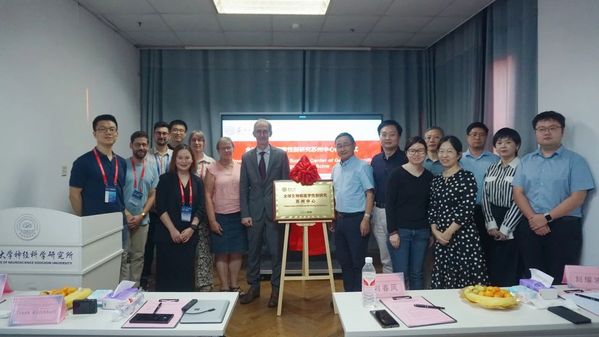
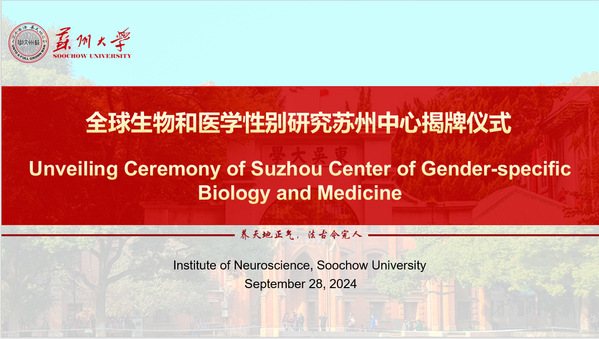
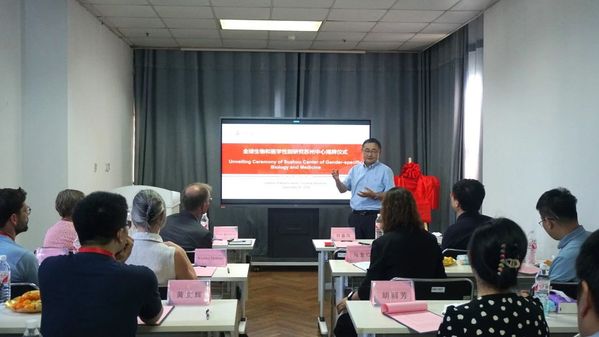
In September, the golden wind is cool. On the afternoon of September 28, the unveiling ceremony of the Suzhou Center of Gender-specific Biology and Medicine was held in the conference room of the Institute of Neuroscience of Soochow University. Professor Wiebke Möbius of the Max Planck Institute in Germany, Janos Groh of the Technical University of Munich, Huang Wenhui, chief researcher of Saarland University, Guo Qilin, postdoctoral fellow, and Davide Gobbo group attended the meeting, Liu Chunfeng, director of the Institute of Neuroscience, Liu Yaobo, deputy director, Li Jun, director of the office, and Ma Quanhong, Cao Cong, Cheng Jian, Hu Lifang, Meng Hongrui, Chen Xiumin, and Yao Yizheng of the Institute of Neuroscience. The meeting was chaired by Professor Ma Quanhong of the Institute of Neuroscience.
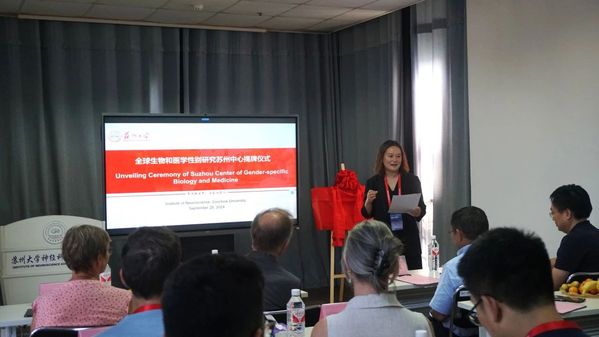
Professor Ma Quanhong delivered an opening speech
First of all, Professor Ma Quanhong welcomed the experts who came from afar and sincerely thanked every expert and scholar who participated in the meeting during their busy schedules. Professor Ma Quanhong introduced the experts and scholars attending the meeting in detail, saying that the establishment of the Suzhou Center for Biological and Medical Gender Research by the Institute of Neuroscience of Soochow University and Saarland University in Germany has strengthened the in-depth cooperation between neurobiology and top international scientists, and provided valuable insights for understanding the role of gender in brain diseases.
Director Liu Chunfeng delivered a speech
Liu Chunfeng, director of the Institute of Neuroscience of Soochow University, briefly introduced the development and research of the Institute of Neuroscience. He said that gender differences need to be considered in clinical drug treatment. No one has yet designed individualized treatment plans for men and women, but classifying these differences is an important first step in understanding how gender, brain, and immune systems are interconnected in health and disease. Identifying the root causes of these disparities, and ultimately developing treatments that are individualized, is critical to achieving health equity. Therefore, this ceremony will also effectively promote the integration of resources in neurobiology and medical gender research, build a bridge between medicine at home and abroad, and contribute to the development of healthy China and the field of brain science.
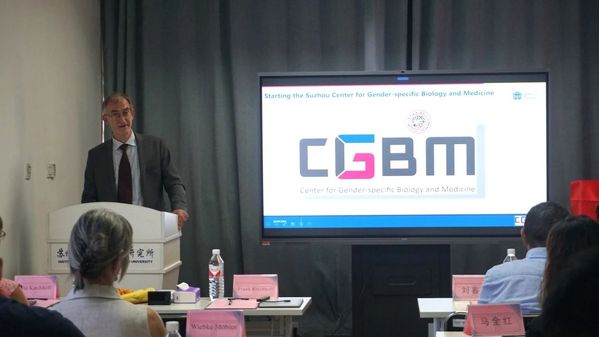
Frank Kirchhoff introduces CGBM
Professor Frank Kirchhoff of Saarland University first introduced the recent research progress of the Department of Molecular Physiology, Faculty of Medicine, Saarland University, Germany, and pointed out that human brain tissue of different sexes has differences in brain structure, neurons, microglia and astrocyte functions. For example, women generally have a stronger immune response to infection than men, and women are more likely to develop mood disorders such as depression and anxiety; At the same time, women are also more likely to develop Alzheimer's disease than men, and the microglia in the brain of men tend to exhibit an amoeba-like morphology compared to the microglia in the brain of women with Alzheimer's disease. Professor Frank believes more needs to be done to understand how these disease patterns change across genders and how they affect the course of brain diseases. Subsequently, Professor Frank introduced the overview of the Center for Gender Studies in Biology and Medicine and the advantages of resource integration brought about by the establishment of a global network of gender research centers in biology and medicine, and expressed the necessity of establishing the Suzhou Center for Global Gender Research in Biology and Medicine with the Institute, and plans to gradually establish a global network for gender research in neurobiology and medicine.
Next, the experts and scholars at the meeting exchanged views with each other, and Professors Liu Yaobo, Cheng Jian, Yao Yizheng, Meng Hongrui and Ma Quanhong had a lively discussion with Professor Frank Kirchhoff. Future basic and clinical research can start from the interaction between neuro and glial cells, and evaluate potential therapeutic strategies through experimental models such as cells and mice, so as to bring new breakthroughs in the treatment of sex-specific brain diseases.

Then, the professors of the Institute of Neuroscience also introduced the research direction and progress of their work, hoping that the next research can reveal the molecular mechanism of the difference between sex in brain diseases and provide an important theoretical basis for the treatment of brain diseases with gender differences.
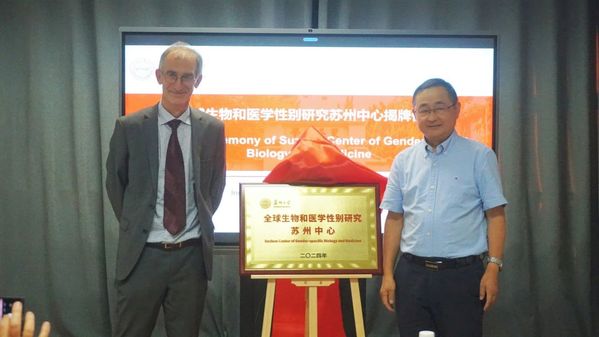
At the ceremony, Director Liu Chunfeng and Professor Frank Kirchhoff jointly inaugurated the Suzhou Center for Global Biological and Medical Gender Research, which marks the official establishment of the Center for Biological and Medical Gender Research (CGBM) in China. The establishment of CGBM not only provides a theoretical basis for the mechanism of sex differences in diseases, but also provides new ideas for clinical treatment.