
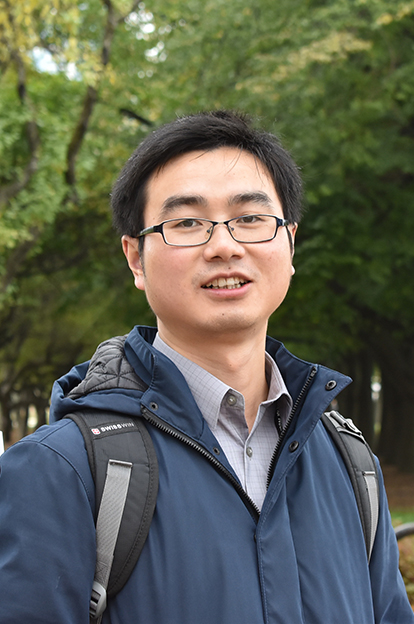
Name:Qi-fei Cong
Teaching Title:Professor
E-mail:qfcong@suda.edu.cn
Research Interests:
1)The Regulatory Mechanism of Neuroimmune Interactions in Synaptic Plasticity
2)Circuit Mechanisms and Intervention Strategies for Social and Emotional Disorders
3)Precision Pharmacological Interventions and Novel Target Exploration for Depression
Resume:
Prof. Cong earned his Bachelor's degree from Nanjing University in 2010 and his Ph.D. from the Shanghai Institute of Materia Medica, Chinese Academy of Sciences in 2015. From 2016, he conducted postdoctoral research at the University of Texas Health Science Center at San Antonio, USA. In 2021, he joined the Institute of Neuroscience at Soochow University as a Full Professor.
He has secured numerous research grants, including two from the National Natural Science Foundation of China, one from the Jiangsu Provincial Natural Science Foundation, one Major Basic Research Project for Jiangsu Higher Education Institutions, one Suzhou Medical and Health Science and Technology Innovation Project, and three Open Project grants from Key/Joint Laboratories. He has authored over 20 SCI-indexed papers, published in internationally renowned journals such as Nature Neuroscience (2025, 2020) and Nature Communications. He is a recipient of the Young Scientist Award from the Yangtze River Delta Neuroscience Youth Forum. Furthermore, he has been selected for the Jiangsu Provincial "Shuang Chuang" Ph.D. Program and the Jiangsu Association for Science and Technology Young Science and Technology Talent Support Project.
He currently holds several academic positions, including Standing Committee Member of the Neuroregeneration and Repair Professional Committee of the Chinese Research Hospital Association, and Member of the Jiangsu Society of Neuroimmunology. He also serves as the Executive Editor-in-Chief of the journal Glycoscience & Therapy and as a Youth Editorial Board Member for the journals Brain-X and Advanced Technology in Neuroscience.
Selected Publications:
1、Lu Y, Zhou Z, Li Q, Yang B, Xu X, Zhu Y, Xie M, Qi Y, Xiao F, Yan W, Liang Z, Cong Q, Hu G. Perturbation response scanning of drug-target networks: Drug repurposing for multiple sclerosis. J Pharm Anal. 2025 Jun;15(6):101295.
2、Chen ZP, Zhao X, Wang S, Cai R, Liu Q, Ye H, Wang MJ, Peng SY, Xue WX, Zhang YX, Li W, Tang H, Huang T, Zhang Q, Li L, Gao L, Zhou H, Hang C, Zhu JN, Li X, Liu X, Cong Q, Yan C. GABA-dependent microglial elimination of inhibitory synapses underlies neuronal hyperexcitability in epilepsy. Nat Neurosci. 2025 Jul;28(7):1404-1417.
3、Tillmon H, Soteros BM, Shen L, Cong Q, Wollet M, General J, Chin H, Lee JB, Carreno FR, Morilak DA, Kim JH, Sia GM. Complement and microglia activation mediate stress-induced synapse loss in layer 2/3 of the medial prefrontal cortex in male mice. Nat Commun. 2024 Nov 12;15(1):9803.
4、Li Y, Yin Q, Li Q, Huo AR, Shen TT, Cao JQ, Liu CF, Liu T, Luo WF, Cong QF. Botulinum neurotoxin A ameliorates depressive-like behavior in a reserpine-induced Parkinson's disease mouse model via suppressing hippocampal microglial engulfment and neuroinflammation. Acta Pharmacol Sin. 2023 Jul;44(7):1322-1336.
5、Cong Q, Soteros BM, Huo A, Li Y, Tenner AJ, Sia GM. C1q and SRPX2 regulate microglia mediated synapse elimination during early development in the visual thalamus but not the visual cortex. Glia. 2022 Mar;70(3):451-465.