
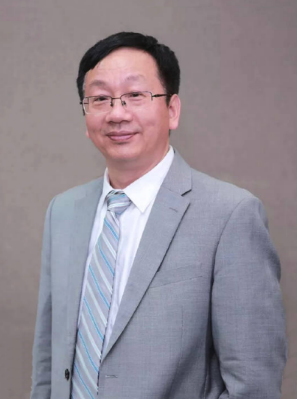
Name: Guang-Yin Xu
Teaching Title: Professor
Phone: 0512-65882817
E-mail: guangyinxu@suda.edu.cn
Research Interests:
1) Molecular Biology and Epigenetic Regulatory Mechanisms of Chronic Pain;
2) Central Sensitization Mechanisms of Brain-Gut Axis Homeostatic Imbalance;
3) Neural Circuit Mechanisms and Intervention Strategies of Negative Emotions and Instinctive Behaviors.
Resume:
Prof. Guang-Yin Xu, PhD supervisor, Distinguished Professor (Level II), serves as Director of the Institute of Frontiers in Brain X Soochow University and Deputy Director of the Academic Committee of Suzhou Medical College of Soochow University. Prof. Xu is also the Jiangsu Distinguished Professor (First Cohort), the leading talent of Jiangsu Province's "Double Innovation Team," and the high-level innovative and entrepreneurial talent introduced to Jiangsu Province. His research focuses on the epigenetic regulation and neural circuit mechanisms underlying chronic pain and its associated negative emotions. He has published over one hundred high-impact research papers in journals such as Neuron, Nat Commun., PNAS, JNS, GUT, etc. Returning to China as a specially appointed scholar in 2010, he has secured funding for four key projects and one major international collaborative project from the National Natural Science Foundation of China, and currently leads a sub-project under the National Key Programme. He currently serves as the deputy president of the Chinese Neuroscience Society (CNS), director committee member of Science Popularisation and Continuing Education of CNS, former director committee member (and founder) of the Human Microbiome Committee of the Chinese Association for Physiological Sciences, council member of the Chinese Association for Physiological Sciences, etc. He serves as Executive Deputy Editor for Neuroscience Bulletin, Frontiers in Neuroanatomy, and Molecular Pain, and as Executive Editor for Sensory Neuroscience. His honours include a Second Prize of the Huaxia Medical Science and Technology Award and one Ministry of Education Science and Technology Progress Award. He acts as a peer reviewer and final assessment expert for the National Natural Science Foundation of China, and is a member of the expert panel for its major projects.
Selected Publications:(* Corresponding author)
1、Li D, Li YC, Zhu ZY, Zhang FC, Zhao QY, Jiang JH, Shen B, Tang Y, Xu GY*. The paraventricular thalamus mediates visceral pain and anxiety-like behaviors via two distinct pathways. Neuron. 2025 May 6:S0896-6273(25)00302-2. doi: 10.1016/j.neuron.2025.04.019. Online ahead of print.PMID: 40345185
2、Li YC#, Zhang FC#, Li D, Weng RX, Yu Y, Gao R*, Xu GY*. Distinct circuits and molecular targets of the paraventricular hypothalamus decode visceral and somatic pain. Neuron. 2024 Sep 21:S0896-6273(24)00648-2. doi: 10.1016/j.neuron.2024.08.024. Online ahead of print.PMID: 39326407.
3、Zhang FC#, Weng RX#, Li D#, Li YC, Dai XX, Hu S, Sun Q, Li R*, Xu GY*. A vagus nerve dominant tetra-synaptic ascending pathway for gastric pain processing. Nat Commun. 2024 Nov 13;15(1):9824. doi: 10.1038/s41467-024-54056-w.
4、Xu QY, Kong Y, Meng XW, Peng K, Yu Y, Song SY, Yang YF, Liu HY, Xu GY*, Ji FH. Paraventricular hypothalamic input to anterior cingulate cortex controls food preferences in chronic visceral pain mice. Nat Commun. 2025 Jul 1;16(1):5943. doi: 10.1038/s41467-025-61178-2.
5、Wu YY#, Wang Q #, Zhang PA#, Zhu C, Xu GY*. miR-1306-3p directly activates P2X3Rs in primary sensory neurons to induce visceral pain in rats. Pain. 2023 Jul 1;164(7):1555-1565.